
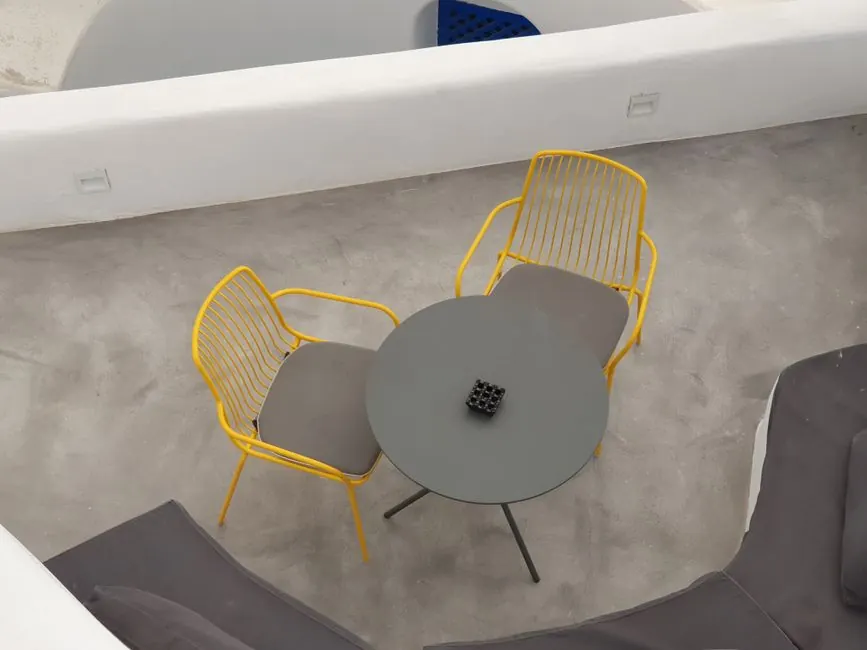
Removing stains from a concrete patio comes down to three things: identifying what the stain is, using the right cleaner for that specific stain, and giving it enough dwell time to work. Oil, rust, mold, and organic leaf tannins each need a different approach, and grabbing the wrong bottle usually sets the stain deeper into the surface. This guide walks through what we actually do on patios across Lakeland - the mixes, the dwell times, the pressure settings, and the point where DIY stops being worth your Saturday.
Concrete patio stain removal is a surface-treatment process that lifts contaminants out of the porous slab before they bind permanently to the cement paste. The longer a stain sits, the deeper it migrates - a fresh oil drip is a 20-minute job, a two-year-old one is a different conversation. We'll cover the four stain types you'll see most in Polk County, the cleaning method for each, and what it costs to hand it off.
If you're comparing options for Concrete Contractor Lakeland FL work, the same crew that pours and repairs slabs is usually the one best equipped to clean and seal them.
Match the Cleaner to the Stain Before You Scrub
Scrubbing a stain with the wrong product is the fastest way to make it permanent. Concrete is porous - it has millions of tiny capillaries that wick liquid downward. When you flood a stain with the wrong chemical, you can push it deeper or set it with heat from a stiff brush.
Here's the short version of what works on what:
- Oil and grease: an emulsifying degreaser, cat litter or diatomaceous earth as a poultice, then a hot-water rinse.
- Rust: oxalic acid or a commercial rust remover. Never bleach - bleach makes rust worse.
- Mold and mildew: oxygen bleach (sodium percarbonate) or a 1:10 household bleach solution, plus a stiff brush.
- Algae and leaf tannins: oxygen bleach with a longer dwell time, then pressure rinse.
- Paint and caulk: a gel paint stripper, then a plastic scraper - never a metal one.
One rule that saves patios: test every product on a hidden corner first. Lakeland slabs poured before the 1990s sometimes have a softer, more porous finish than newer pours, and a cleaner that's fine on a 2015 driveway can etch a 1985 patio.
How Do I Remove Stains from My Concrete Patio in Lakeland FL?
You remove stains from a concrete patio in Lakeland FL by pretreating the stain, letting the cleaner dwell 10-20 minutes, agitating with a stiff nylon brush, and rinsing with a pressure washer set between 2,500 and 3,000 PSI. The specific cleaner depends on the stain type - there's no single product that handles oil, rust, and mold at once.
Central Florida adds two variables most national guides ignore. First, our humidity keeps mold and mildew alive year-round - a patio that stays shaded by a live oak will grow a new biofilm every 6-8 weeks during the rainy season. Second, our afternoon thunderstorms dump 2-3 inches in under an hour, which drives water and dissolved minerals into every crack and control joint. That's why we see more rust staining around patio furniture legs here than contractors in drier states do.
If you're in an older neighborhood like Concrete Contractor in Dixieland, patios from the 1950s and 60s often have a rougher broom finish that traps dirt in the grooves. Those need a slower, lower-pressure wash and a longer dwell time than a modern trowel-finished slab.
Step-by-Step: DIY Concrete Patio Stain Removal Lakeland
Here's the process we'd walk a homeowner through if they wanted to handle it themselves. Budget 2-4 hours for a standard 12x20 patio, plus drying time.
- Sweep and pre-rinse. Remove loose debris, then wet the whole slab so the cleaner doesn't dry out mid-job. On a 90°F Lakeland afternoon, work in 4x4 sections so nothing flashes dry.
- Apply the correct cleaner. Use a pump sprayer for even coverage. For oil, use a degreaser at full strength. For rust, oxalic acid mixed per the label. For mold, oxygen bleach at 1 cup per gallon of warm water.
- Let it dwell 10-20 minutes. This is the step people skip. The chemical needs time to break the bond - scrubbing immediately just moves the stain around.
- Agitate with a stiff nylon brush. Not wire. Not a push broom. A deck brush with stiff nylon bristles gets into the pores without gouging the surface.
- Rinse at 2,500-3,000 PSI. Keep the wand moving and stay 8-12 inches off the surface. One pass, then check. Two passes max.
- Repeat for stubborn stains. Oil that's been sitting for months may need a poultice - cat litter or diatomaceous earth mixed with degreaser, spread over the stain, covered with plastic, and left 24 hours.
- Let it dry 24-48 hours, then seal. A penetrating sealer is what keeps the next stain from soaking in.
If the stain is on a driveway rather than a patio, the same chemistry applies but the surface area changes the math - see our notes on Concrete Driveway Repair Lakeland FL for how we handle larger slabs.
Can I Pressure Wash a Concrete Patio in Lakeland FL?
Yes, you can pressure wash a concrete patio in Lakeland FL, but keep the pressure between 2,500 and 3,000 PSI and use a 25-degree nozzle. Anything above 3,500 PSI will strip the top layer of cement paste and leave a permanently rough, etched surface that collects dirt faster than before.
Three things matter more than the machine:
- Nozzle angle. 25-degree for general cleaning, 40-degree for decorative or stamped surfaces. Never a 0-degree tip on concrete.
- Distance. 8-12 inches from the surface. Closer than that and you're carving, not cleaning.
- Overlap. 50% overlap on each pass so you don't leave zebra stripes. Those stripes are etched concrete, and they don't wash out.
Stamped or decorative patios need extra care. The release agent and color hardener used in Decorative Concrete Lakeland FL can be damaged by high pressure, so we drop to 1,500 PSI and use a soft-wash pre-treatment on those surfaces.
What Removes Oil Stains from a Concrete Patio in Lakeland?
An emulsifying degreaser plus a poultice removes oil stains from a concrete patio in Lakeland - bleach and dish soap alone won't do it. Oil is a hydrocarbon, and it needs a surfactant that breaks the oil-water bond so it can be rinsed away rather than pushed deeper.
The poultice method is what we use on older stains:
- Mix cat litter or diatomaceous earth with just enough degreaser to make a paste.
- Spread it 1/4 inch thick over the stain, extending 2 inches past the edges.
- Cover with plastic wrap and tape the edges down.
- Leave it 24 hours - the poultice pulls oil up out of the concrete by capillary action.
- Sweep it up, then rinse with hot water.
For a fresh drip, you can often skip the poultice: blot with paper towels, cover with cat litter for an hour, sweep, then degrease and rinse. The key is speed - oil that's been on the slab for a week has already wicked 1/4 inch deep, and no surface cleaner will reach it.
If the oil has been there for years and the slab is already cracked or spalling around the stain, cleaning won't fix it. That's a Concrete Crack Repair Lakeland FL job, and it's worth doing before you seal - sealing over a crack just traps moisture underneath.
What to Watch Out For
These are the mistakes we see most often when homeowners try concrete patio stain removal on their own.
- Using bleach on rust. Bleach is an oxidizer - it accelerates rust. Use oxalic acid instead.
- Letting cleaner dry on the surface. In Lakeland's heat, a cleaner can flash dry in 5 minutes and leave a chemical burn that looks worse than the original stain. Work in sections and keep the surface wet.
- Pressure washing too close. Etching is permanent. You can't buff it out - you have to resurface.
- Skipping the sealer. Cleaning without sealing means you'll be doing this again in 90 days. A penetrating sealer buys you 3-5 years of easier cleanup.
- Mixing chemicals. Bleach plus ammonia equals toxic gas. Bleach plus acid equals toxic gas. Never mix - rinse thoroughly between products.
- Ignoring the source. If a downspout dumps onto the patio, or a grill sits in the same spot every summer, the stain will come back. Fix the drainage or move the grill.
One more: don't use muriatic acid as a general cleaner. It's for etching before a coating, not for stain removal, and it will burn vegetation and damage nearby metal furniture.
When to Call a Professional
Call a professional when the stain covers more than about 25 square feet, when it's been there longer than six months, or when the slab is stamped, colored, or already sealed. Those three conditions turn a DIY afternoon into a job that can permanently damage the surface if you guess wrong.
We also get called when the stain is a symptom rather than the problem. Rust streaks near a patio edge often mean rebar is too close to the surface and starting to corrode. White chalky patches can be efflorescence - mineral salts wicking up through the slab - which points to a moisture issue underneath. Cleaning those without fixing the cause is wasted effort.
Our team handles Concrete Sealing Lakeland FL as the follow-up step on almost every cleaning job, because a sealed patio stays clean 3-5 times longer than an unsealed one. If the surface is too far gone to clean, we'll tell you straight and quote Concrete Resurfacing Lakeland FL instead of taking your money for a wash that won't hold.
How Much Does Concrete Patio Cleaning Cost in Lakeland FL?
Concrete patio cleaning in Lakeland FL runs $0.15 to $0.40 per square foot for standard pressure washing, and $0.75 to $1.50 per square foot when stain treatment and sealing are included. A typical 12x20 patio (240 sq ft) lands between $180 and $360 for a full clean-and-seal.
Typical 2026 pricing in this area breaks down roughly like this:
- Basic pressure wash: $75-$150 for a small patio, $150-$300 for a large one.
- Stain treatment (oil, rust, or mold): add $50-$150 depending on severity.
- Penetrating sealer: $1.00-$2.00 per square foot, or $240-$480 on a 240 sq ft patio.
- Resurfacing (if the slab is too far gone): $3-$7 per square foot.
DIY materials for the same job - degreaser, oxygen bleach, a pump sprayer, a deck brush, and a sealer - usually run $80-$150. The math only favors DIY if you already own a pressure washer and you're comfortable working in sections before the cleaner dries.
Frequently Asked Questions
How do I remove stains from my concrete patio in Lakeland FL?
Identify the stain first, then use the matching cleaner: degreaser for oil, oxalic acid for rust, oxygen bleach for mold and algae. Let it dwell 10-20 minutes, scrub with a stiff nylon brush, and rinse at 2,500-3,000 PSI. Test on a hidden corner before treating the whole slab.
What removes oil stains from concrete patio in Lakeland?
An emulsifying degreaser plus a poultice of cat litter or diatomaceous earth. Spread the poultice 1/4 inch thick, cover with plastic, and leave it 24 hours. For fresh drips, blot and cover with cat litter within the first hour - speed matters more than product choice.
Can I pressure wash concrete patio in Lakeland FL?
Yes, at 2,500-3,000 PSI with a 25-degree nozzle and the wand held 8-12 inches off the surface. Stay under 3,500 PSI to avoid etching the cement paste. Stamped or colored patios should be washed at 1,500 PSI or less.
How much does concrete patio cleaning cost in Lakeland FL?
Expect $0.15-$0.40 per square foot for pressure washing alone, or $0.75-$1.50 per square foot for cleaning plus stain treatment and sealing. A 240 sq ft patio typically runs $180-$360 for the full service.
How often should I clean and seal a concrete patio in Lakeland?
Clean it twice a year - spring and fall - and reseal every 3-5 years. In shaded areas with heavy leaf drop, bump cleaning to every 3-4 months during the rainy season to stay ahead of mold and tannin staining.
Get Help with Concrete Contractor in Lakeland
If your patio stain won't budge, or you'd rather not spend a Saturday with a pressure wand in 90-degree heat, our crew handles cleaning, stain treatment, and sealing across Lakeland and the surrounding Polk County neighborhoods.
Call Lakeland Concrete Services at +1 863-398-0750 and we'll tell you straight whether it's a cleaning job, a sealing job, or a resurfacing job - and what it'll cost before we start.